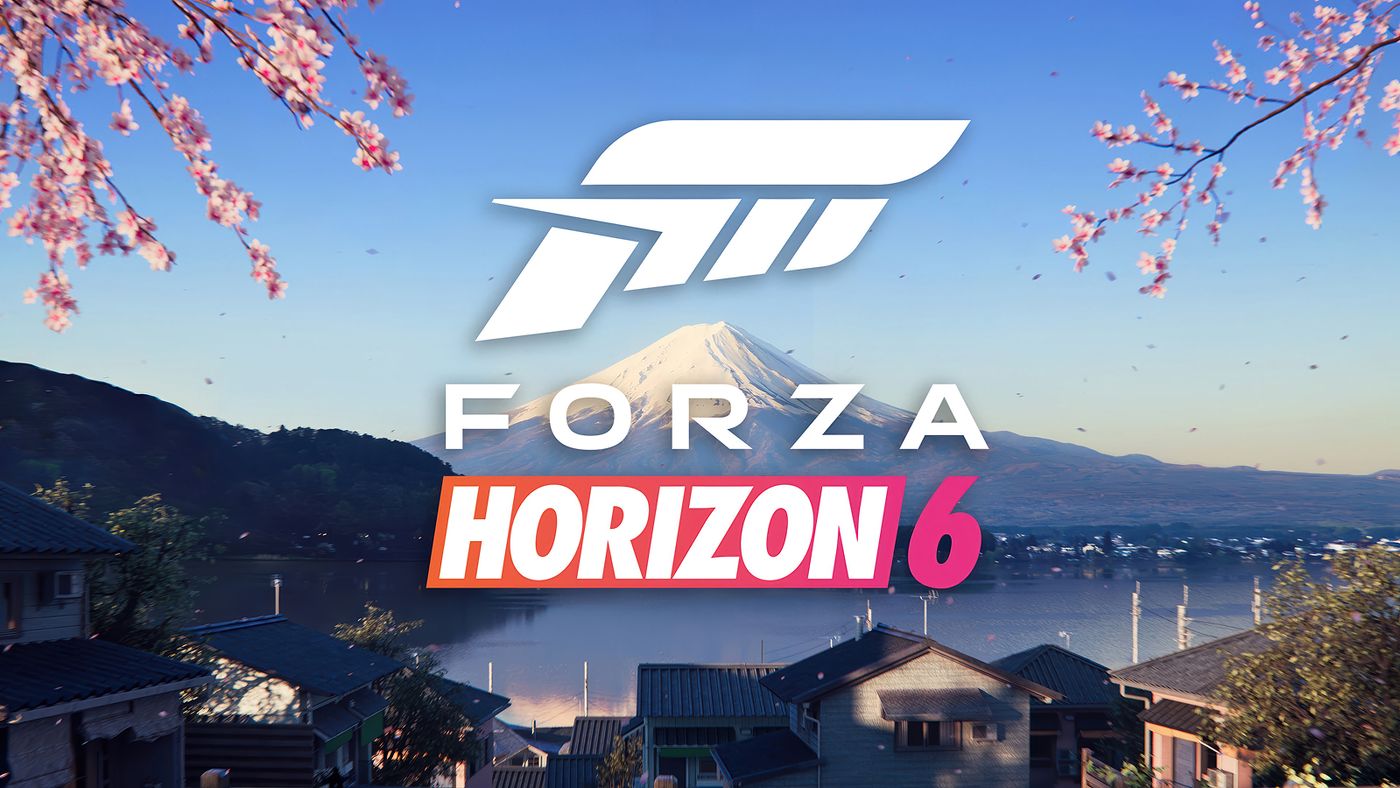
Forza Horizon 6, Japan, and the Meaning of Speed
By SKJ
Set in Japan, Forza Horizon 6 explores a racing culture shaped by restraint, ritual, and mechanical intimacy—reframing what open-world driving can represent.
[{"_key":"ap7uYcD3gJJyJ0KlpD7aY7","_type":"block","children":[{"_key":"ap7uYcD3gJJyJ0KlpD7abN","_type":"span","text":"<h1><a href=\"chatgpt://generic-entity?number=0\">Forza Horizon 6</a>, Japan, and the Meaning of Speed</h1>\n<p>When <em>Forza Horizon 6</em> confirmed its setting as Japan, the announcement landed less like a surprise and more like a long-delayed inevitability. For years, players had asked for it—not because Japan was unexplored in racing games, but because it represented something <em>Horizon</em> had never fully engaged with before: a culture where cars are not merely tools of competition, but extensions of identity, ritual, and place.</p>\n<p>Japan does not treat speed as spectacle first. It treats it as language.</p>\n<p>That distinction matters. And <em>Forza Horizon 6</em> appears to understand it.</p>\n<hr>\n<h2>A Landscape Built for Driving, Not Showing Off</h2>\n<p><img src=\"/images/articles/forza-japan-mountains.jpg\" alt=\"Mountain roads cutting through rural Japan\"></p>\n<p>Japan’s geography resists exaggeration. Roads twist rather than sprawl. Cities compress vertically instead of stretching outward. Rural highways carve through forests and mountains with deliberate restraint, shaped by terrain rather than convenience.</p>\n<p>In <em>Forza Horizon 6</em>, this geography becomes foundational to the game’s design. The open world is dense, but not cluttered. Long expressways coexist with narrow touge passes. Urban routes feel lived in rather than engineered for spectacle. Driving here demands attention—not because the game asks for it, but because the roads do.</p>\n<p>Unlike previous <em>Horizon</em> locations, Japan does not flatter reckless speed. It rewards rhythm. Precision. Familiarity.</p>\n<p>The setting quietly enforces a philosophy: mastery comes not from aggression, but from understanding.</p>\n<hr>\n<h2>Touge, Not Tracks: A Cultural Shift</h2>\n<p><img src=\"/images/articles/forza-japan-touge-night.jpg\" alt=\"Night racing on mountain passes\"></p>\n<p>Racing culture in Japan has historically existed at the margins—after hours, outside official circuits, shaped by geography and community rather than formal sanction. Touge racing, in particular, is less about winning and more about control: knowing the road, respecting its danger, reading its limits.</p>\n<p><em>Forza Horizon 6</em> does not romanticize this culture, but it does reflect its values. Mountain routes are tight and unforgiving. Small mistakes compound. Familiarity with a route matters more than raw horsepower.</p>\n<p>This is racing as conversation between driver and road.</p>\n<p>It is a subtle but meaningful departure from the festival-driven chaos that once defined the series.</p>\n<hr>\n<h2>Cars as Cultural Artifacts</h2>\n<p><img src=\"/images/articles/forza-jdm-garage.jpg\" alt=\"Classic Japanese sports cars lineup\"></p>\n<p>In Japan, cars are not simply products—they are statements shaped by regulation, craftsmanship, and restraint. Engine displacement laws, tuning subcultures, and manufacturer philosophies have long emphasized balance over excess.</p>\n<p><em>Forza Horizon 6</em> reflects this by shifting emphasis away from instant gratification. Cars are introduced with context. Older models matter as much as modern hypercars. Lightweight machines feel intentionally advantaged on narrow roads.</p>\n<p>Tuning systems reward subtlety. A suspension adjustment feels as impactful as a power upgrade. The game encourages players to learn how a car behaves, not just how fast it can go.</p>\n<p>This approach aligns naturally with Japan’s automotive ethos: refinement over dominance.</p>\n<hr>\n<h2>Urban Driving Without Illusion</h2>\n<p><img src=\"/images/articles/forza-japan-city-dusk.jpg\" alt=\"City streets at dusk\"></p>\n<p>Cities in racing games often serve as visual backdrops—neon-drenched fantasies built for screenshots rather than driving. <em>Forza Horizon 6</em> avoids that trap.</p>\n<p>Urban spaces are dense, structured, and constrained. Traffic patterns matter. Intersections are frequent. Speed limits feel implied even when unenforced. The city is not a playground—it is a system.</p>\n<p>This changes how players behave. Aggressive driving feels out of place. Smoothness feels rewarded. The game quietly teaches respect without imposing rules.</p>\n<p>It mirrors real-world Japanese driving culture, where discipline is assumed, not enforced.</p>\n<hr>\n<h2>Rethinking What an Open-World Racer Can Be</h2>\n<p>The significance of Japan as a setting is not visual. It is philosophical.</p>\n<p>By choosing a culture that values precision, ritual, and mechanical harmony, <em>Forza Horizon 6</em> forces the series to slow down—conceptually, if not mechanically. It reframes freedom not as chaos, but as agency within constraints.</p>\n<p>This is not a game about being the loudest car on the road.</p>\n<p>It is about belonging on it.</p>\n<hr>\n<h2>The Cultural Impact</h2>\n<p><em>Forza Horizon 6</em> does not merely depict Japan—it absorbs its values. In doing so, it challenges long-standing assumptions about what open-world racing games should prioritize.</p>\n<p>Speed remains central. But meaning now accompanies it.</p>\n<p>In a genre increasingly defined by excess, <em>Forza Horizon 6</em> offers something rarer: context.</p>\n<p>And in Japan, context is everything.</p>\n<hr>\n<p><em>Games and trademarks are property of their respective owners.</em></p>"}],"style":"normal"}]